


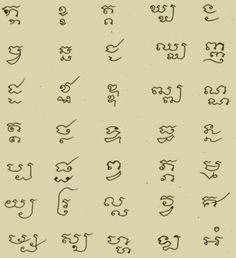
Discover the Khmer Alphabet
The Khmer alphabet is the official writing system of Cambodia. It is used to write the Khmer language, which is spoken by millions of people across the country.
Khmer writing can be seen in books, schools, road signs, newspapers, temples, official documents, and everyday communication. Its beautiful curved letters make it one of the most recognizable writing systems in Southeast Asia.
Learning the Khmer alphabet is an important first step for anyone who wants to read, write, and understand the Khmer language.
The History of the Khmer Alphabet
The Khmer alphabet has a long history that goes back many centuries. It developed from ancient Indian writing systems and was influenced by Sanskrit and Pali.
Ancient Khmer inscriptions can still be found on stone walls and temples across Cambodia. These inscriptions provide valuable information about Cambodian kings, religion, society, and daily life in the past.
The alphabet has continued to develop over time while remaining an important symbol of Khmer culture and national identity.
Khmer Consonants
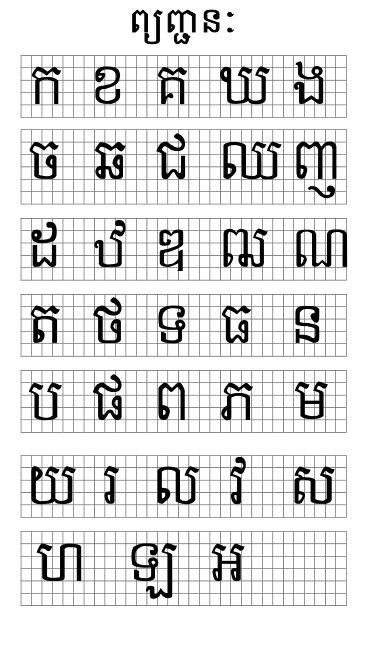
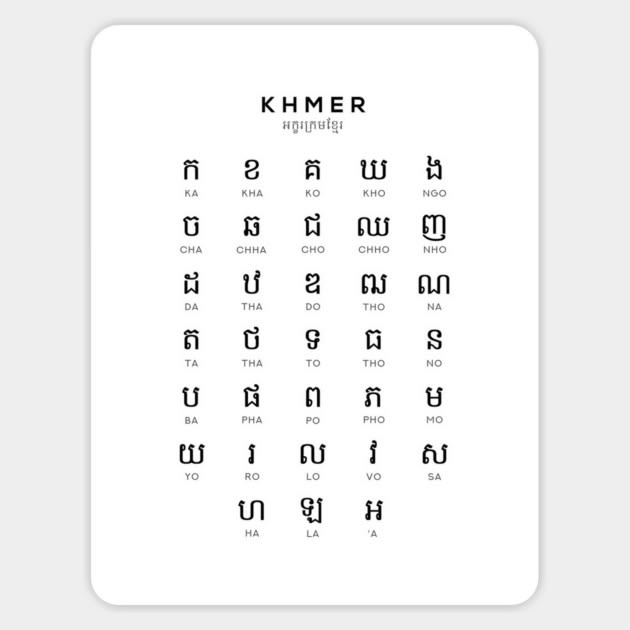
The Khmer alphabet contains 33 consonant letters that are commonly used today.
Each consonant belongs to one of two sound groups, often called the first series and the second series. These groups affect how vowels are pronounced when they are combined with consonants.
Khmer consonants include:
- ក
- ខ
- គ
- ឃ
- ង
- ច
- ឆ
- ជ
- ឈ
- ញ
- ដ
- ឋ
- ឌ
- ឍ
- ណ
- ត
- ថ
- ទ
- ធ
- ន
- ប
- ផ
- ព
- ភ
- ម
- យ
- រ
- ល
- វ
- ស
- ហ
- ឡ
- អ
Khmer Vowels
Khmer has two main types of vowels: independent vowels and dependent vowels.
Dependent vowels cannot normally stand alone. They are written above, below, before, after, or around a consonant.
For example:
- កា
- កិ
- កី
- កុ
- កូ
The same vowel sign may have different sounds depending on the consonant series it is combined with. This can make Khmer pronunciation challenging for beginners, but regular practice makes it easier.
Independent vowels can stand alone without being attached to a consonant. They are less common in everyday writing but are still an important part of the Khmer alphabet.
Khmer Numbers
Khmer also has its own traditional number symbols:
- ០ = 0
- ១ = 1
- ២ = 2
- ៣ = 3
- ៤ = 4
- ៥ = 5
- ៦ = 6
- ៧ = 7
- ៨ = 8
- ៩ = 9
Although international numbers are widely used in Cambodia today, Khmer numbers can still be seen in official documents, traditional texts, calendars, and cultural designs.
How Khmer Words Are Written
Khmer words are usually formed by combining consonants, vowels, and other symbols.
Unlike English, spaces are not always placed between every word. Spaces are often used to separate phrases or sentences instead. Readers understand individual words through their spelling, pronunciation, and context.
Khmer writing also includes special signs that can change sounds, shorten words, repeat words, or indicate pronunciation.
Why the Khmer Alphabet Is Special
The Khmer alphabet is special because of its complex structure, elegant appearance, and cultural importance.
Its letters often have rounded and flowing shapes. These shapes were historically influenced by writing on palm leaves, where straight lines could damage the leaf.
The alphabet is more than a communication tool. It represents Cambodia’s history, education, literature, religion, and cultural identity.
Learning the Khmer Alphabet
Learning the Khmer alphabet takes patience and regular practice.
Beginners can start by learning a few consonants each day. After that, they can practice vowel signs, simple words, and short sentences.
Writing letters by hand, listening to correct pronunciation, reading children’s books, and practicing with native speakers can help learners improve more quickly.
It is also helpful to study the consonant series because they play an important role in Khmer vowel pronunciation.
Preserving the Khmer Language
The Khmer alphabet connects Cambodian people to their ancestors, traditions, and national heritage.
Teaching young people to read and write Khmer helps protect the language for future generations. It also supports Cambodian literature, education, art, and cultural knowledge.
In the digital age, using Khmer correctly in websites, social media, books, and educational materials is an important way to keep the language strong.
A Symbol of Cambodian Identity
The Khmer alphabet is one of Cambodia’s most valuable cultural treasures.
Its ancient history, unique structure, and beautiful appearance make it an important symbol of Cambodian identity. By learning and preserving the Khmer alphabet, people can continue to celebrate and share the richness of Khmer culture with future generations.