


The World's Largest Religious Monument
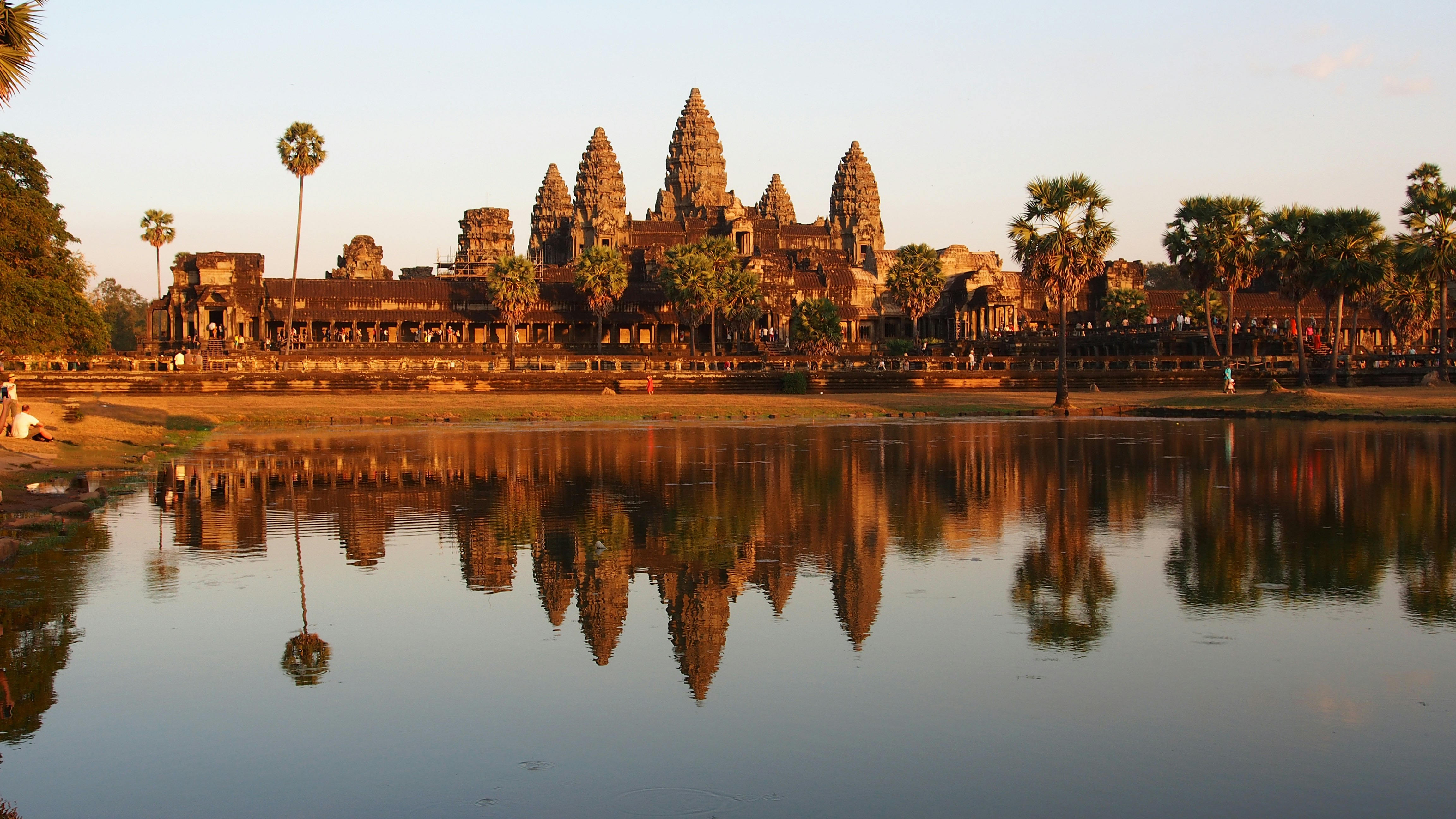
Angkor Wat is not just a temple — it is an entire world. Built in the 12th century by King Suryavarman II, this extraordinary complex covers over 400 square kilometres and represents the pinnacle of Khmer architecture and civilization.
The name means "Temple City" in Khmer, and once you're inside, you understand why. The scale is breathtaking: towers rising 65 metres into the sky, walls covered in thousands of intricate stone carvings, galleries stretching for hundreds of metres, and moats wide enough to feel like lakes.
────────────────────────────────────────────────────────────
The Angkor Complex: More Than One Temple
Most visitors don't realize that Angkor Wat is just one temple within a vast complex. The Angkor Archaeological Park contains dozens of temples, each with its own character:
Angkor Wat
The iconic image of Cambodia — on the flag, on every postcard. Visit at sunrise for the unforgettable reflection in the moat. Arrive by 5:00 AM for the best spots.
Bayon
The temple of faces. Hundreds of serene stone faces carved into every tower, staring out in all directions. Mysterious, haunting, and utterly unique.
Ta Prohm
The "jungle temple" — left intentionally unrestored, with massive tree roots growing through the ancient stones. Made famous by the film Tomb Raider.
Banteay Srei
The "Citadel of Women" — smaller than the others but considered the most beautiful, with extraordinarily detailed pink sandstone carvings.
Preah Khan
A sprawling, atmospheric complex that feels like a true exploration — less visited, with long corridors, hidden courtyards, and incredible carvings.
────────────────────────────────────────────────────────────
Tips for Visiting
Buy your pass in advance — 1-day ($37), 3-day ($62), or 7-day ($72) passes available
Start early — temples open at 5:00 AM; arrive before 7:00 AM to beat the crowds and the heat
Hire a local guide — the history and symbolism of the carvings is extraordinary, and only a guide can bring it to life
Dress respectfully — shoulders and knees must be covered to enter temples
Bring water — the heat is intense; hydrate constantly
Take a tuk-tuk — the most practical and atmospheric way to get between temples
────────────────────────────────────────────────────────────
The Symbolism Behind the Stones
Every carving at Angkor tells a story from Hindu and Buddhist mythology. The most famous is the Churning of the Ocean of Milk — a 50-metre bas-relief at Angkor Wat depicting gods and demons pulling a giant serpent to churn the cosmic ocean and create the elixir of immortality.
Understanding these stories transforms your visit from sightseeing into something much deeper.
────────────────────────────────────────────────────────────
Bring Cambodia Home With You
The best way to honour a visit to Angkor is to support the living culture it represents. Cambodian artisans today continue traditions that stretch back to the Angkor era — stone carving, silk weaving, silver jewellery, and lacquerwork.
At Kabas Concept Store, we bring together over 40 Cambodian local brands whose work is rooted in this heritage. From handwoven silk scarves to handcrafted jewellery inspired by Khmer motifs, every product is a piece of living Cambodian culture.
Visit us in Phnom Penh (#65 Street 178) or Siem Reap (200 Pokambor Ave) — or shop online at kabasconceptstore.com, with worldwide delivery.
────────────────────────────────────────────────────────────
Angkor Wat is a reminder of what human beings are capable of when inspired by beauty and devotion. It is one of the most powerful places on earth — and Cambodia is lucky to call it home.
Angkor Wat: Everything You Need to Know Before You Go
Published on Apr 29, 2026
1 views
Angkor Wat is not just a temple — it is an entire world. Built in the 12th century, this extraordinary complex is one of the most powerful places on earth, and visiting it well requires knowing where to go and when.
Angkor
archaeology